BY: JOSE ANTONIO MORGADO AND MARI CARMEN HORMIGO
1.1 HEIR TO AN EMPIRE
- From his mother´s side, the kingdom of Castile, Navarre, the Crown of Aragon and territories in America and Italy.
- From his father´s side, the Netherlands, Luxemburg and France-Comté. When his grandfather, the emperor Maximilian, died, he also inherited his German territories and was given the title of emperor.
1.2 PROBLEMS WITHIN THE EMPIRE
- The Revolts of the Comuneros (1520-1521) was an uprising of nobles, the bourgeoisie and the peasants of Castile against the king´s economic policy.
- The Revolts of the Brotherhoods (1521-1523) was an uprising of artisans and peasants in Valencia and Mallorca. The artisans wanted access to government office and the peasants wanted better rental conditions.
1.3 PROBLEMS ABROAD
- He went to war which France (1525-1544), defeated the Fench army in the Battle of Pavia.
- He fought the Turk (1529-1541).
- He confronted the Germans princes, who supported Lutheran reform.

2. THE SPANISH EMPIRE OF PHILIP II
2.1 PHILIP II´S GOVERNMENT
- Philip II, as head of the government of Spain, believed in the divine right of monarchs and used this to justify a number of immoral and illegal acts, such as ordering murders. Philip developed a system of regional self-government with viceroys answering to him and he ruled as an absolute monarch.
- Philip II was Chief Minister and he appointed Secretaries of State to aid him. The first was Gonzalo Perez who died in 1566. He was replaced by his son Antonio Perez who was hard working and ambitious. Perez allied himself with the Prince of Eboli, Philip’s favourite. Eboli believed that the government should consist of autonomous states with their own customs, laws and privileges i.e. he wanted a federal system of government. This solution was opposed by the Dukes of Alva who wanted Phillip to adopt a hard line approach to bring states under the close control of the Crown.
2.2 FOREING POLICY
- Against the French, who he defended in the battle of Saint-Quentin in 1557.
- Against the Turks , who he defeated in the battle of Lepanto in 1571.
- Against England, which supported the Protestants and attacked Spainish Armada to invade England, but the fleet was destroyed in a storm.

3.SPANISH ECONOMY AND SOCIETY IN THE 16th CENTURY
3.1 THE ECONOMY
From the Spanish Empire in the New World came an influx of precious metals,
which had profound economic effects. The flow became especially important in the
second half of the sixteenth century, and consisted of both gold and silver, with
the latter metal predominating. The Spanish went to great lengths to secure the
entire supply for themselves and prevent any of their precious cargoes from
falling into the hands of their rivals. Each year the plate fleet, bearing the
bullion from the mines of Peru and Mexico, was accompanied to Spain by a convoy
of warships, and during the sixteenth century no other nation ever succeeded in
intercepting this fleet. Francis Drake was able, however, to rob Spanish treasure
in Central America and in the Pacific.

3.2 SOCIETY
In the 16th century, the population of
Spain increased, especially in Castile. The majority of the population
continued to live in the countryside, and the cities had few
inhabitants.
The privileged class was made up of nobles and clergy, who owned most of the land. Eighty percent of the population were peasants, who paid taxes and hat limited rights.
Other groups in Spain society included Moriscos and converted Jews. These group were the constant targets of religious and ethnic persecution.

4. THE DECLINE OF THE EMPIRE IN THE 17th CENTURY
4.1 PHILIP III: THE GOVERMENT OF FAVOURITES
Monarchs in the 17th century left governing to favourites,
who because very powerful ministers. During is short reign, Philip III
delegated power to the Duke of Lerma, who maintained peace abroad.
,
In 1609, Philip III ordered the expulsion of the
Moricos from the Peninsula. This made the shortage of agricultural
products worsed because the majority of Moriscos were peasants and many
rural were left almost unpopulated.4.2 PHILIP IV: THE END OF EUROPEAN DOMINANCE
Crisis came in 1640. An attempt by Olivares to intervene
in Catalonia to deal with the French invasion threat resulted in revolt.
An alliance of Catalan rebels and French royal forces proved
challenging to suppress, and in trying to mobilise Portuguese noble
support for the war, Olivares triggered a second uprising. Lisbon's
nobles expelled Philip, and gave the throne to the Braganzas, marking
the end of sixty years of the Iberian Union and the beginning of the
Portuguese Restoration War.
The next year, the Duke of Medina Sidonia attempted
another rebellion against Philip from Andalusia, possibly attempting to
reproduce the Braganzas success in Portugal. Although Philip and
Olivares were able to repress the ducal revolt, Philip had found himself
increasingly isolated. On his return from Zaragoza, where he had been
commanding the army, he found only one of the Castilian nobility arrived
at court on Easter Day 1641. The threat of Philip's being deposed by
the grandees of Castile seemed increasingly real.
4.3 CHARLES II: CRISIS IN THE HABSBURG MONARCHY
Spain experienced a period of crisis during the reign of Charles II,
Spain´s last Habsburg monarch. The crisis was caused by the king´s
incompetence, corruption among his favourites and a number of economics
problems.
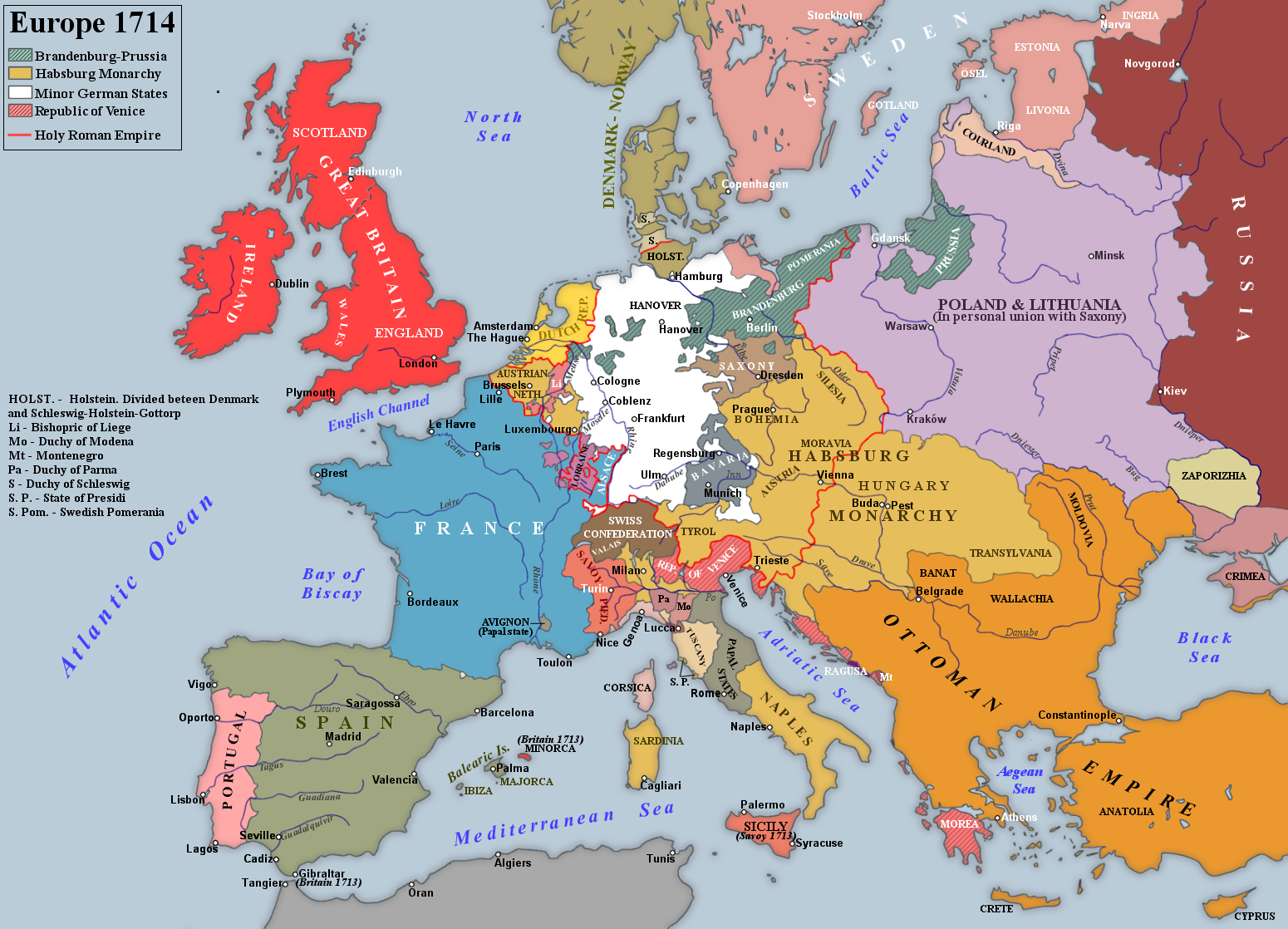
When Charles II died without an heir in 1700, the War of the Spanish Succession
broke out between Philip of Frances´s Bourbon dynasty and Charles of
Austria. The victory of French brought an end to the Habsburg monarchy
in Spain.

5. ECONOMIC AND SOCIAL CRISIS IN THE 17th CENTURY
5.1 CRISIS IN THE CROWN OF CASTILE
Political commentators in Spain, known as arbitristas,
proposed a number of measures to reverse the decline of the Spanish
economy. But in fact they did little to change the attitude of the
nobility toward work. Contempt for retail trading was reinforced by its
association with conversos and moriscos, who were distrusted by the
Spanish general population because of their Jewish or Muslim
background.
The expulsion of Jews and Moors by Isabella and
Ferdinand, though popularly received, was economically disastrous. In
rural areas of Spain, heavy taxation of peasants reduced agricultural
output as peasants in the countryside migrated to the cities. Many
believed that the influx of gold and silver from the Americas was the
cause of inflation, when only one fifth of the precious metals actually
went into Spain. A more prominent internal factor was the Spanish
economy's dependence of luxurious Merino wool, the demand of which was
replaced by cheaper textiles from England and the Netherlands. The
prosperous region of Spain was Catalonia, where peasants had more rights
than the rest of Spain. That changed in 1650, when a plague broke out
in Catalonia, undermining the local economy.
The crisis did not have the same effect on places like Aragon, which had not been central to American trade. In the 17th century. Aragon´s more stable economy allowed new trading companies to appear, and a silk textile industry also began.

No hay comentarios:
Publicar un comentario